She Reached MIT at Fourteen, Then Left to Fund the Fight Against Aging
Laura Deming took a Thiel Fellowship in the program's first class and turned it into a longevity venture fund, then a cryonics company.
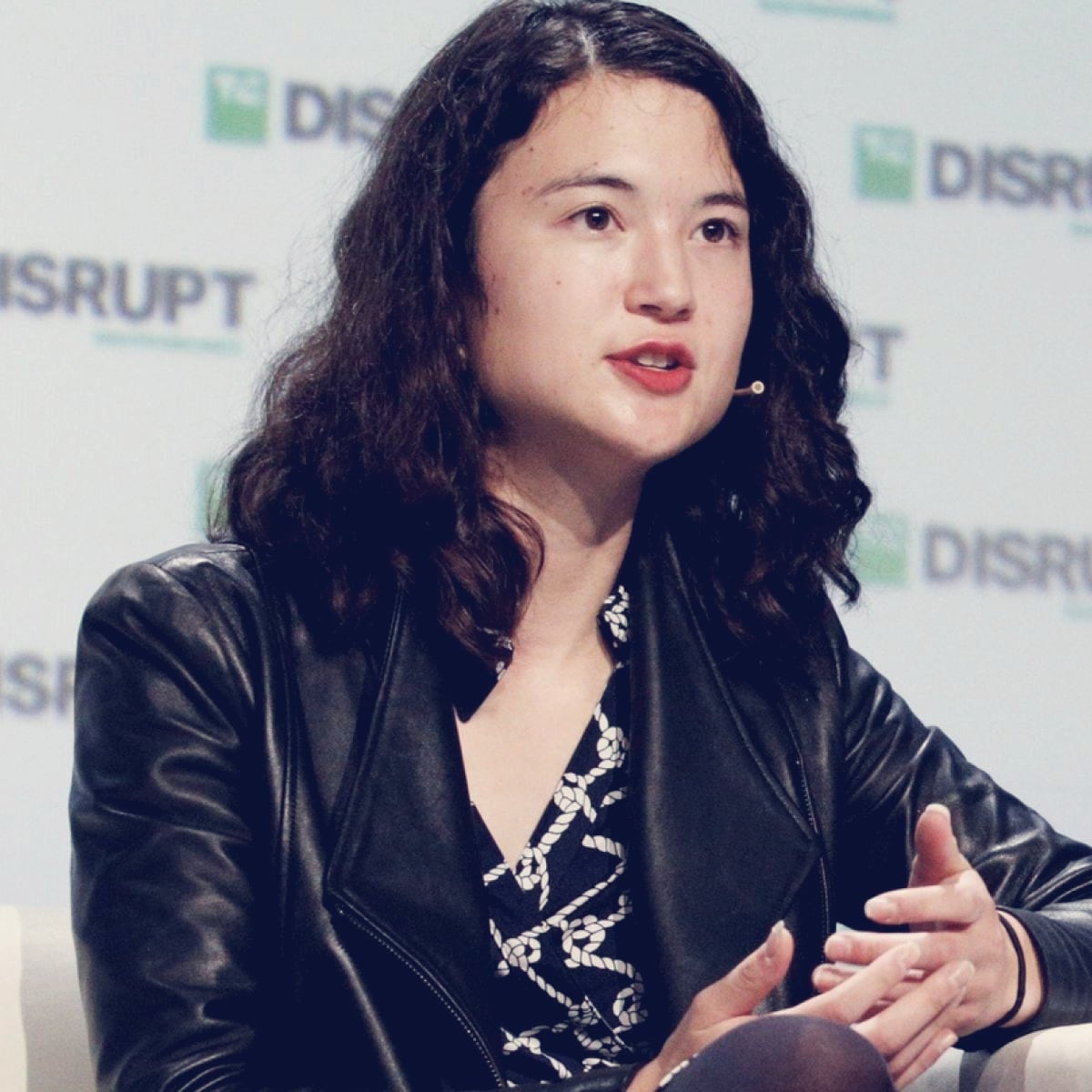
By the time most people have chosen a college major, Laura Deming had already left college. According to TechCrunch, she was at MIT by 14, studying physics, and at 16 dropped out after being accepted into the Thiel Fellowship, which gave young people $100,000 “who want to build new things.” Wikipedia, citing Forbes and MIT Technology Review, places that award in 2011 and says she was one of only two women in the first class.
The route to MIT had been unusual in its own right. At 11, TechCrunch reports, she wrote to the UCSF biologist Cynthia Kenyon, who agreed to a lab visit and later let her work there. STAT quotes the email: “I think the research you are doing is amazing.” Kenyon had found that a single-gene mutation could double the lifespan of the roundworm C. elegans, a result that helped start the modern search for ways to extend human life.
From fellowship to fund
Deming did not use the grant to build a lab. She started a venture fund. TechCrunch says she was 17 and had never managed money when she raised the first Longevity Fund, a total of $4 million. In August 2017, at 23, she closed a second fund of $22 million; asked whether Peter Thiel was an investor, she answered, “We don’t really talk about our LPs.” STAT put the pool at $27 million in 2018. Her pitch to other investors, as TechCrunch relays it, was a comparison: “if you believe in cancer companies, you should also care about aging companies.”
The portfolio TechCrunch names includes Unity Biotechnology, then freshly raised on a large Series B. Deming said the first fund invested in five companies and that she expected the second to back eight to 10. Fund returns are slow, private and rarely published, and none of the sources here report them, so whether the strategy worked remains unknowable from the public record.
In 2023, per Wikipedia, she and Alex Colville started a follow-on fund, Age1, which Wikipedia says had raised $55 million as of 2024 citing an SEC filing (a 2023 Wall Street Journal headline cited alongside it reports $35 million, so the figures may reflect different dates).
Cradle, then Until
Her current company is stranger. In June 2024, Longevity.Technology reported that Cradle, co-founded with chief scientist Hunter C. Davis, had emerged with $48 million to build whole-body reversible cryopreservation. Its first milestone, from February 2024, was recovering electrical activity in a cryopreserved and rewarmed slice of rodent neural tissue, which the company called a “foundational proof of concept.” On X, Deming wrote: “Think the hibernation pods you see in space movies for long-term travel - we want to build that.” The same article notes that the whole-body and human goals are future targets, and that the only completed result is the rodent tissue experiment; its tone, it should be said, is largely the company’s own.
By September 2025 the company, renamed Until Labs, had closed a $58 million Series A led by Founders Fund, with Lux Capital and Field Ventures, for total funding over $100 million. Its first product is organ cryopreservation for transplant patients and surgeons; the whole-body goal is described as long-term.
What it is evidence of
Deming is evidence of a version of the dropout story that rarely gets told: the one where the credential is not skipped for a product but for a thesis. She did not leave to build an app. She left to hold a view about a neglected field, and then to get other people to pay for it.
That is also the risk. A thesis has no revenue to check it against. Longevity is a long game on a short fund cycle, and the sources cited here describe milestones, rounds and intentions, not cures. The Thiel program’s broader record is mixed; the Chronicle of Philanthropy reported in 2014 that only six of the first 40 completed fellows had returned to college, a figure that says little about whether the rest succeeded.
What Deming’s case does show is how early a person can accumulate a bedrock of real work. A lab placement at 12, physics studies begun at 14, an investing record by 17. The fellowship did not invent that, it paid for what came next. For the many fellows without a lab to walk into, the grant offers less.
Sources
- This 23-year-old just closed her second fund, which is focused on aging, with $22 million, TechCrunch, August 22, 2017
- Her bio reads like Silicon Valley fan fiction. At 23, she's investing millions in the quest to defy death, STAT, May 22, 2018
- Cradle emerges with $48m to build reversible cryonics technology, Longevity.Technology, June 6, 2024
- Cryopreservation startup lands $58m to 'pause biological time', Longevity.Technology, September 23, 2025
- Laura Deming, Wikipedia, January 1, 2026
- For Some Thiel Fellows, Drop-Out Grant Is More Like a Sabbatical, The Chronicle of Philanthropy, July 10, 2014
Image: TechCrunch / Kimberly White, Wikimedia Commons, CC BY 2.0.