The Freshman Who Took the Check and Left Brown
Dylan Field swapped a computer-science degree for a $100,000 Thiel grant and spent four years building Figma in near-silence.
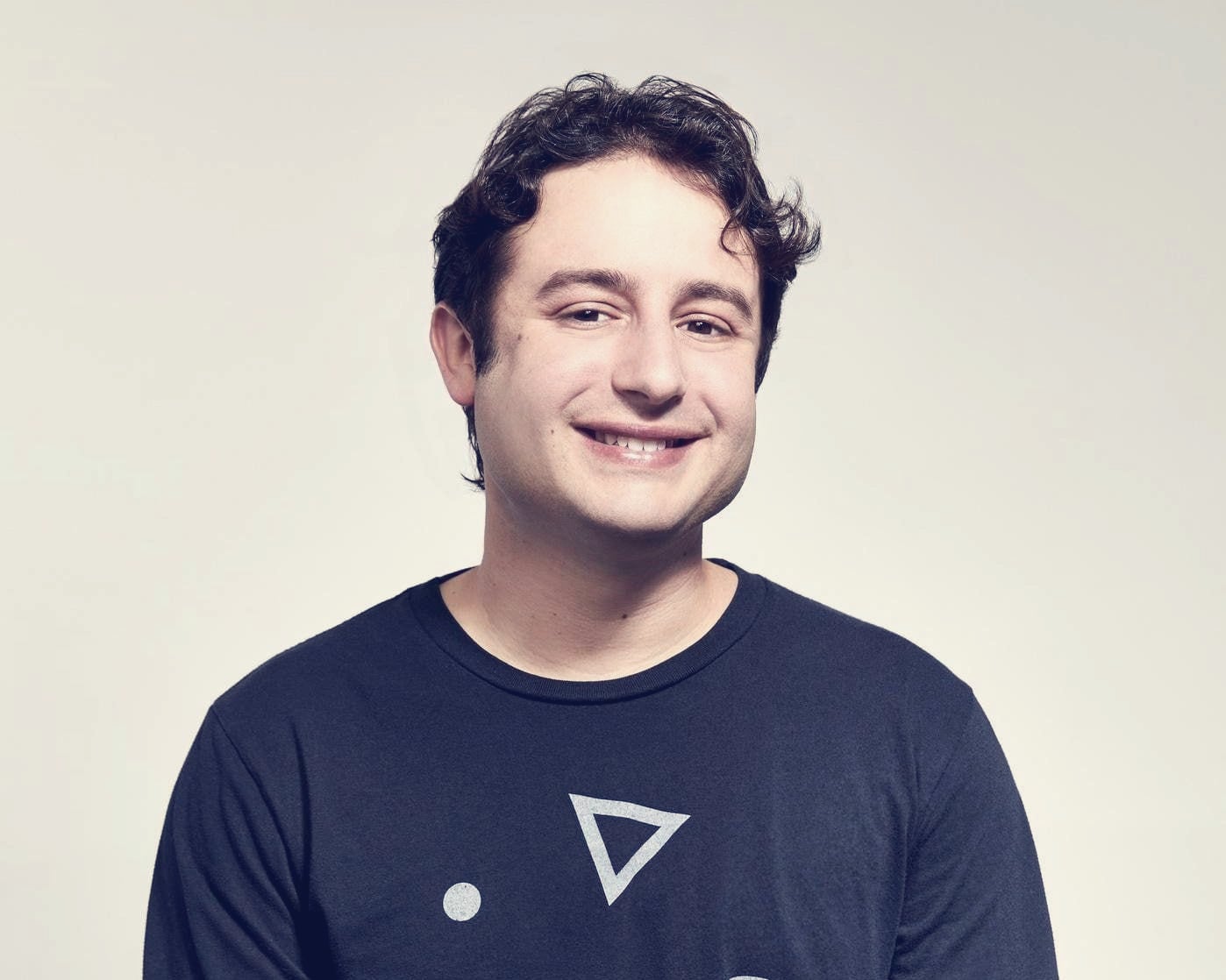
In 2012, Dylan Field was a computer-science freshman at Brown who had already worked at Microsoft, LinkedIn and, twice, Flipboard. That spring he was awarded a Thiel Fellowship, which Fortune describes as a $100,000 grant for young entrepreneurs willing to leave college. He took it. Index Ventures puts it plainly: Field applied, dropped out, and moved to San Francisco, and Evan Wallace, a Brown teaching assistant he had met in class, followed.
The bet was about browsers. The two men were drawn to WebGL, the technology that lets a web page draw graphics at speed. Their idea, a design tool that lived in the browser rather than on a desktop, sounded like a feature request to anyone who had ever opened Photoshop.
The long quiet
What is striking about the Figma story, read from the other end of an IPO, is how little happened for so long. Index Ventures, which led a $1.7 million seed round in 2013, reportedly invested $86.5 million over the following twelve years, according to Fortune. The firm’s Danny Rimer told Fortune in 2023 that “Here was this 19-year-old, who had a lot of clarity about what he wanted to do.” He also recalled his own warning: “We’re not going to have anything for two years, so we hope you’re comfortable with that.”
It was longer than two. Roughly four years passed between the 2012 pitch and Figma’s launch as a free tool in September 2016, per Index. Asked about timing, Field’s answer, as Index recounts it, was “Next year! We want to get it just right.” Early enterprise customers, Rimer says, worried the company would not survive: “We can’t scale Figma internally because no one believes you’ll be around in a year.”
It survived. Fortune reports a $115 million valuation in 2018 and $10 billion by June 2021. In September 2022 Adobe announced a $20 billion acquisition; regulators killed the deal in 2023, and Adobe paid Figma a $1 billion breakup fee. Figma then went public on the New York Stock Exchange on July 31, 2025. Its shares rose about 250% on the first day and closed at $115.50, a valuation near $68 billion, more than triple what Adobe had offered. Field, 33 at the time, made a statement that was almost modest: “We know this is just the start.”
What it is evidence of
Field is the fellowship’s showpiece, and the reason is arithmetic. Fortune’s 2025 survey of the program says its fellows have founded more than 11 unicorns worth over $100 billion combined. A single outlier does a great deal of that work.
The cleaner lesson in Field’s case is not that college is optional. It is that he left with unusual cargo. By 19 he had four jobs on his résumé, a technical co-founder who was already a collaborator, and an investor who had known him since he was 18. The fellowship did not conjure those things. It paid for two years of runway in which they could compound. Even the dropout was less spontaneous than it sounds: Rimer told Fortune that Field had the “ambition of dropping out of university” before the grant arrived.
Then there is the question of who it did not work for. The program has always attracted skepticism that it rewards the already-advantaged. When The Chronicle of Philanthropy surveyed the first cohorts in 2014, it reported that the Thiel Foundation said only six of the 40 fellows who had completed the program had returned to college, while TechCrunch reported that nearly half of the Thiel Fellows planned to return to school after their fellowships. TechCrunch’s Sarah Buhr wrote that “A lot of the kids seemed to be using the program as more of a prestigious two-year internship.” Neither figure measures failure directly; they measure how many fellows treated the grant as a pause rather than a rupture, which is its own kind of finding. The award itself is also not a fixed quantity: Fortune’s 2025 piece says it is now $200,000.
Field’s own case is hard to generalize for a second reason. Wallace left Figma in 2021, per Fortune, and the product he built the foundation for needed a decade of patient capital. Most companies founded by nineteen-year-olds do not get a decade. The honest reading of Dylan Field is that the Thiel check bought him time and proximity, and that his talent, plus a very specific bet on a very specific technology, did the rest. The dropouts who follow his path inherit the check and the narrative. They do not inherit the browser.
Sources
- Figma's 33-year-old cofounder is a former LinkedIn intern who launched the $68 billion Wall Street darling with $100k from Peter Thiel, Fortune, August 1, 2025
- Figma Goes Public: Thirteen Unforgettable Years with Dylan Field, Index Ventures, July 31, 2025
- Gen Z and millennial founders who dropped out of college and took the Peter Thiel fellowship, Fortune, August 16, 2025
- For Some Thiel Fellows, Drop-Out Grant Is More Like a Sabbatical, The Chronicle of Philanthropy, July 10, 2014
Image: Forbes (Figma portrait), Press portrait, used with credit.