The Dropout Who Priced the Election
Shayne Coplan built Polymarket in three months during lockdown. Five years on, it is a $9 billion bet that odds are the news.

When federal agents came to Shayne Coplan’s Manhattan home in the last weeks of the Biden administration, he told CBS’s 60 Minutes, there was “a lot of, like, yelling and banging on the door.” He was not arrested. The agents took his phones and computers. Afterward he posted, in the register of a man whose product is the ability to be right in public: “New phone, who dis?”
He was 26. The company he ran, Polymarket, was by then the place where most of the internet watched the 2024 presidential election. Fortune put its share of online wagers on the outcome at about 85 percent, a figure it attributed to the venture investor Nick Tomaino. CBS reports that about $3.6 billion was wagered on the winner question alone.
Three months in a lockdown
The origin story is short and slightly unfashionable for a billionaire: a computer-science student leaves New York University in his freshman year, stares at a pandemic, and wonders when it will end. CBS reports that Coplan built Polymarket in about three months in 2020, at 22, and did so without seeking the regulatory approval that the law required. His competitor Kalshi did seek it. The difference between those two decisions explains most of what followed.
He had been around crypto for a while. Fortune notes the lore that he was among the youngest participants in Ethereum’s 2014 token sale, when coins sold for about thirty cents. The platform runs on blockchain rails, which let it take bets from anywhere and answer to no particular office. In 2022 the Commodity Futures Trading Commission, which had opened an inquiry the year before, collected a $1.4 million penalty for operating without registration, and Polymarket stopped serving Americans.
It kept growing anyway. By the autumn of 2024 Fortune counted roughly $70 million raised, including a $45 million round that May, from investors that included Vitalik Buterin and Peter Thiel. The government dropped its investigations in July 2025, according to CBS. In October 2025, Bloomberg reported that Intercontinental Exchange, the parent of the New York Stock Exchange, would invest up to $2 billion, and that the deal made Coplan the youngest self-made billionaire on its index. CBS put Polymarket’s valuation at $9 billion, with no profit yet. In April 2026, The Block reported that the company was seeking $400 million at a $15 billion valuation, citing The Information, and CFTC approval to relaunch its main platform in the United States, which it had reached through the 2025 purchase of a registered exchange, QCEX.
What the odds are for
Coplan’s pitch is that a price beats a pundit. “It’s the most accurate thing we have as mankind right now,” he told CBS, “until someone else creates some sort of a super crystal ball.” Asked by Fortune how the product should be understood, he texted that it is “much more categorized as a derivatives platform, where the pricing of such derivatives becomes invaluable real-time.” The claim is that a market with money at stake aggregates information faster than a poll does. Money is a good way to make people honest, and an even better way to make them numerous.
The trend Coplan is evidence of is that probability has become a consumer product. For a generation that did not trust the credentialed forecaster, a live percentage next to a news event feels less like gambling than like a better headline. It is also a bet on a business model: write the contract, collect the fee, let the world supply the volatility.
The parts that do not show up in the odds
The accuracy claim has caveats, and Polymarket’s own history supplies most of them. Fortune’s blockchain analysis estimated that wash trades, in which one party takes both sides, made up a third or more of the platform’s bets in 2024; Polymarket declined to comment. Volume that flatters a product is not the same as information. The company has also not been profitable, according to CBS, and its own investor list now includes both Thiel and Donald Trump Jr.’s firm, 1789 Capital, which CBS says put in around $10 million. That is not corruption, but it is a position in the same weather system the odds claim to measure.
Insiders are the quieter problem. A market rewards whoever knows first, and an anonymous wallet cannot be cross-examined. The Block reports that Polymarket says insider trading is unwelcome and that offenders “will be identified,” and that it has hired the analytics firm Chainalysis to help. It also cites a study covering 2023 to 2025 that found 3.14 percent of accounts were “skilled winners.” Most customers, in other words, are the liquidity.
Then there is luck. Coplan founded his company in a year when the world wanted to bet on one dramatic outcome, and the next one arrived on schedule. A company that is a mirror of the news cycle has a news-cycle’s revenue curve. Whether a mid-term year, a regulated U.S. launch and a crowd of better-funded competitors can hold the volume is the unproven part of the valuation.
What is proven is narrower and still remarkable. A New York kid left college, built a thing in a season, absorbed a fine, a ban and an FBI visit, and ended up with a stake that Bloomberg valued near a billion dollars. Coplan said the current administration is “very pro-innovation, and pro-crypto, and pro-Polymarket.” Past administrations were not, and the next may not be. The business has always carried a regulatory option on its own survival; the odds on that are not listed.
Not financial advice.
Sources
- Polymarket CEO Shayne Coplan on the accuracy of its predictions (60 Minutes), CBS News, November 30, 2025
- Polymarket's 26-year-old CEO on his crypto betting site and the presidential election, Fortune, November 3, 2024
- Polymarket taps Chainalysis to police insider trading as it seeks $15 billion valuation, CFTC signoff, The Block, April 30, 2026
- Polymarket founder is youngest self-made billionaire on ICE deal, Bloomberg, October 8, 2025
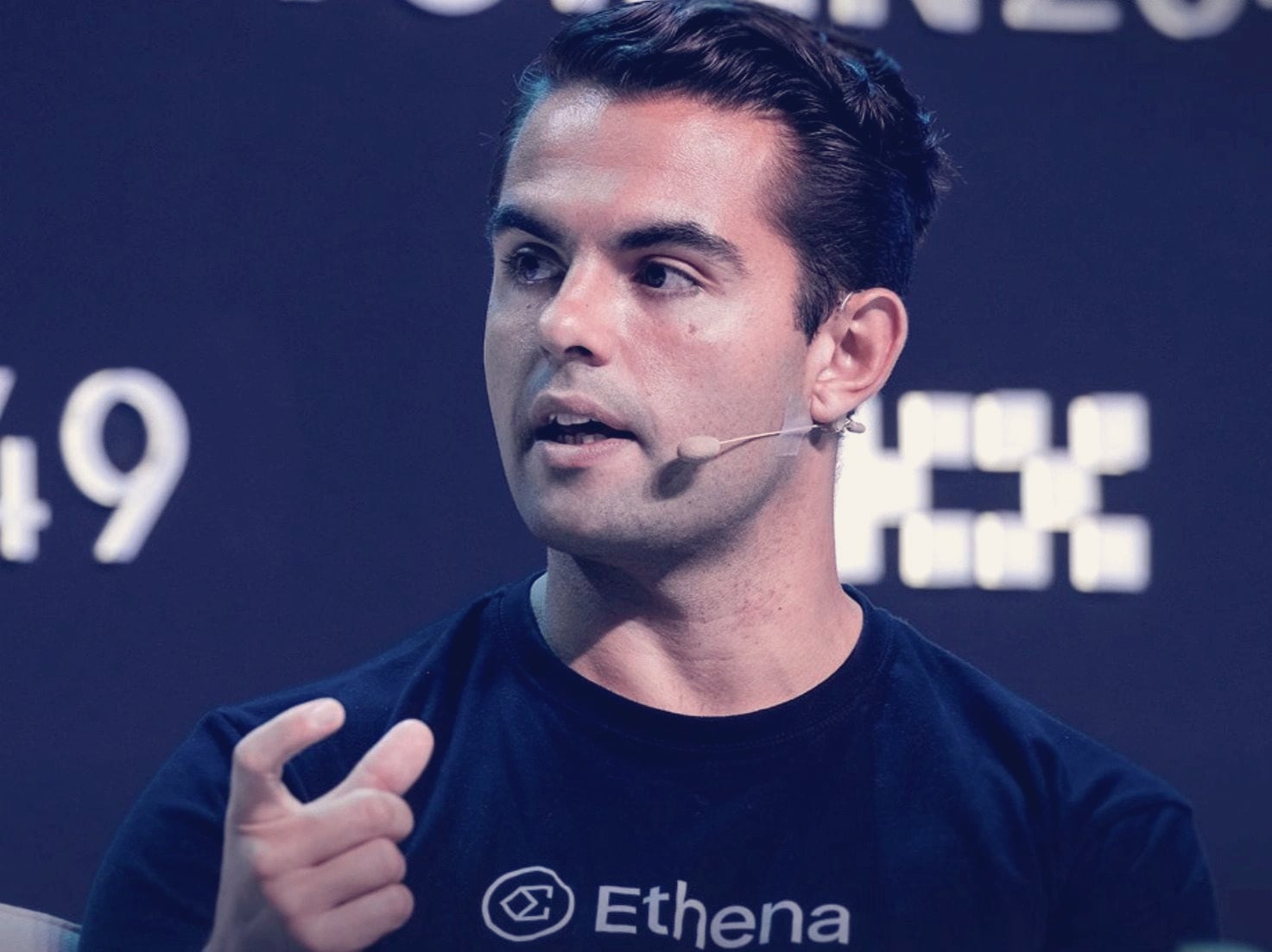
Image: Forbes, Used with credit.