The Factory Floor of the Memecoin Boom
Pump.fun's three founders made launching a coin free and instant. The revenue was immediate; so were lawsuits that call the site a casino.
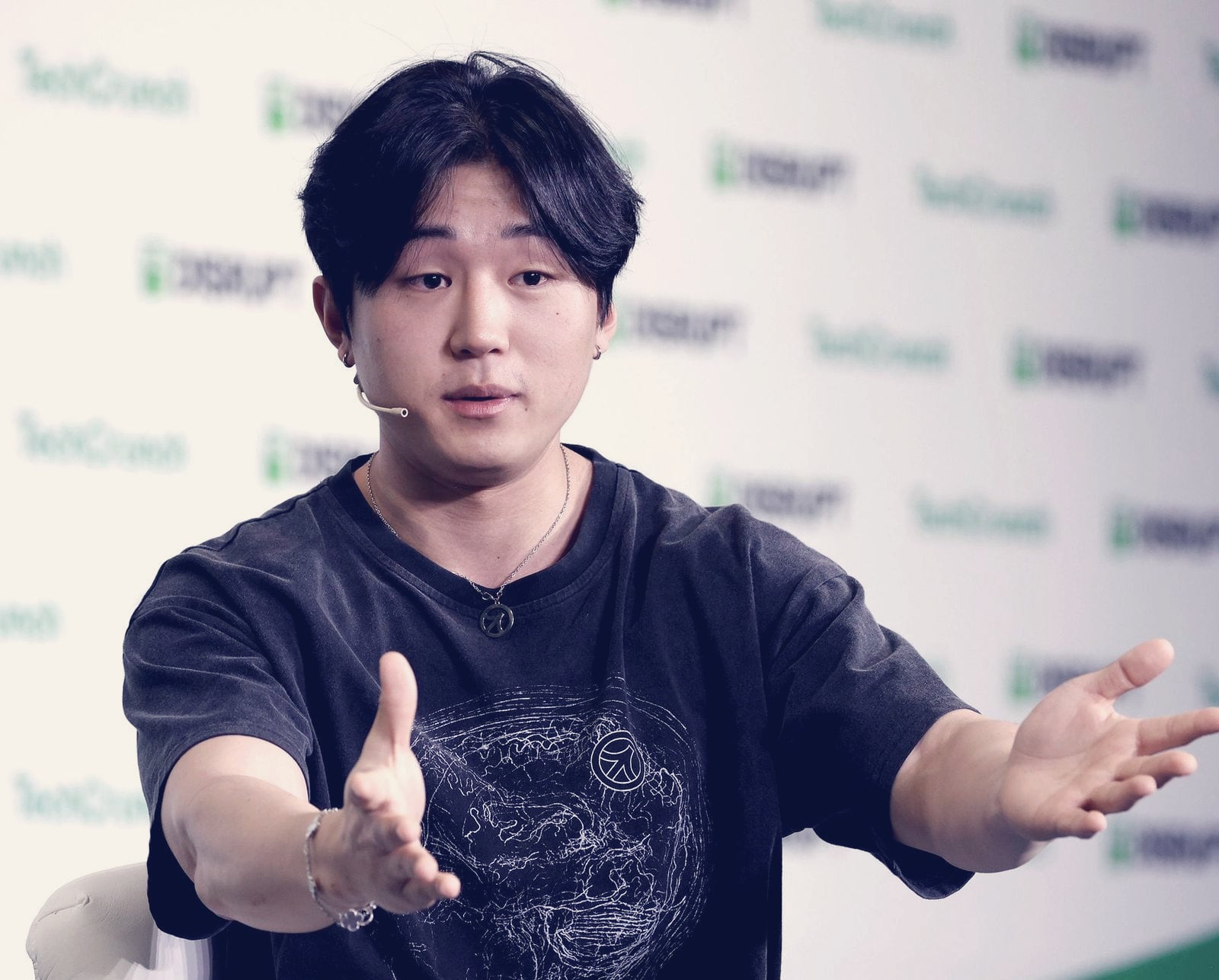
On the afternoon of November 25, 2024, Pump.fun announced that it was “pausing the live streaming functionality on the site for an indefinite time period.” Gizmodo reported that the company said the platform had outgrown its moderators; it was taking down hundreds of streams a day and had doubled its human moderation team. A day earlier, Gizmodo had catalogued what the feature produced: streamers threatening self-harm or violence in exchange for a rising coin price, a staged hanging, a developer who set himself on fire on camera and was hospitalized with third-degree burns. Its founder, who goes by Alon on X, had said his goal was for it to be “the most fun place on the internet.”
It was a strange sentence to need in a crisis. It was also the whole business plan.
A product for the feeling
Pump.fun is a website on the Solana blockchain where anyone can create a memecoin for free with a name, a ticker and an image. Forbes reported that prices follow a formula called a bonding curve, that a coin starts at a market capitalization of $5,000, and that it “graduates” to the exchange Raydium at $90,000. Pump.fun takes a 1 percent fee on trades and an extra 1.5 Solana tokens, then worth about $350, for each graduation.
The founders, whom Forbes said its sources identified as Alon Cohen, Dylan Kerler and Noah Tweedale, declined to give Forbes their full names. The magazine described all three as in their early twenties and based in Europe, and said two of them had worked at Nftperp, a platform for trading perpetual futures on NFTs, in 2022. When the NFT market collapsed, they turned to memecoins. They raised $350,000 before launch from Alliance DAO, Forbes reported, citing PitchBook. Cohen, it said, messaged more than 3,000 memecoin traders for feedback before writing a line of the product. His summary of the pitch: “We basically wanted to democratize that feeling of making a 10x on something like a stupid coin.”
Note the noun. The product is not a coin, or even a market; it is a feeling, manufactured on demand. The site launched in January 2024, according to Gizmodo. By mid-November Forbes counted at least 3 million coins created and $180 million in revenue. By mid-December NBC News cited analytics data, originally from Cointelegraph, putting the figure at $288.4 million. In July 2025, Fortune reported, the company sold its own PUMP token: $600 million in a public sale that took twelve minutes, plus $720 million in private sales, a spokesperson said, for roughly $1.3 billion in all. Fortune also quoted Blockworks putting revenue at nearly $800 million since early 2024. “We absolutely believe this sets the stage for a new era of ICOs,” Cohen said.
The house always collects
The trend the founders are evidence of is the industrialization of the lottery ticket. A college degree is a slow bet with a known price. A memecoin is a fast one with an unknown one, and Pump.fun’s innovation was to remove every friction between a teenager’s impulse and a position. Forbes quoted one trader describing the market as “basically a huge casino”; another said “losing $10,000 in a day is not uncommon.” It cited the research firm BDC for the claim that an average memecoin lasts “a mere 78 minutes” before becoming worthless.
The platform’s own fee structure is indifferent to that outcome. It collects on every trade, whoever wins. Pump.fun says, NBC reported, that it prevents “rugs,” the sudden dumps by creators, by avoiding presales and insider allocations. NBC also recorded the sceptics: a GSR analyst said memecoins have “no underlying driver of its value” and that buyers are “betting on the ‘greater fool,’” and one coin, Hawk, fell from a peak of about $500 million to $28 million in a day. NBC added that it could not independently verify complaints of large individual losses.
Safeguards arrived late, if at all. Gizmodo reported that a child launched a coin, GenZ QUAINT, which allegedly was sold off after reaching a $1 million market cap and later climbed to roughly $85 million. NBC reported that Britain’s Financial Conduct Authority said Pump.fun was not authorized in the United Kingdom and warned that users had no investor protections.
Allegations, not findings
The legal record is still allegation. Cryptonews reported in December 2025 that in the Southern District of New York, three plaintiffs were suing on behalf of investors who bought Pump.fun tokens between March 2024 and July 2025 and lost money. The defendants named were Pump.fun, Jito Labs, the Solana Foundation, Solana Labs and related executives. The plaintiffs allege a coordinated “Pump Enterprise” that gave insiders early access to new tokens while marketing launches as fair; they say retail buyers took the losses once insiders sold. An earlier suit, the report said, accuses Pump.fun of running an illegal “meme coin casino” that generated more than $722 million in revenue while causing $4 billion to $5.5 billion in retail losses.
Cryptonews said the judge, Colleen McMahon, allowed an amended complaint and accepted new evidence from a whistleblower: roughly 5,000 internal chat messages that the plaintiffs say show coordination over transaction timing. The article contained no statement from Pump.fun or the other defendants, and its only reference to a defense was a January 23, 2026 deadline for motions to dismiss. This piece relies on reporting through December 2025 and does not address later rulings. The claims have not been proved, and the court has made no finding on them.
Luck, timing, and the quiet part
Nothing here shows that the founders did what the lawsuits say. What it shows is narrower: three people in their early twenties found the place where a bubble was cheapest to enter, charged a toll, and were rewarded by the bubble’s growth, which they did not control. Revenue of this speed is a measure of attention before it is a measure of durability. When Pump.fun paused its own livestreams, it was admitting, in the genre’s gentle language, that growth had outrun the people responsible for it.
The founders sold a feeling. The lawsuits ask who paid for it.
Not financial advice.
Sources
- Memecoins Explained: Inside Crypto's Stupidest Bubble, Forbes Australia, November 14, 2024
- Pump.fun Is All of the Internet's Worst Impulses on One Site, Gizmodo, November 25, 2024
- Pump.fun Shuts Down Its Bonkers Live Streaming Service, Gizmodo, November 26, 2024
- Memecoins like Fartcoin are riding Trump's victory to huge valuations. Experts say it may have only begun., NBC News, December 15, 2024
- Pump.fun memecoin raise: $600 million public sale, $1.3 billion total, Fortune, July 18, 2025
- Whistleblower drops 5,000 secret chats in Pump.fun lawsuit, Yahoo Finance (Cryptonews), December 18, 2025
Image: Clearus, Wikimedia Commons, CC BY-SA 4.0.