A Former Ballet Dancer and a Citadel Trader Built the Exchange That Everyone Is Fighting Over
Luana Lopes Lara and Tarek Mansour won a federal case, raised at an $11 billion valuation, and now face the states. The product is mostly sports betting.

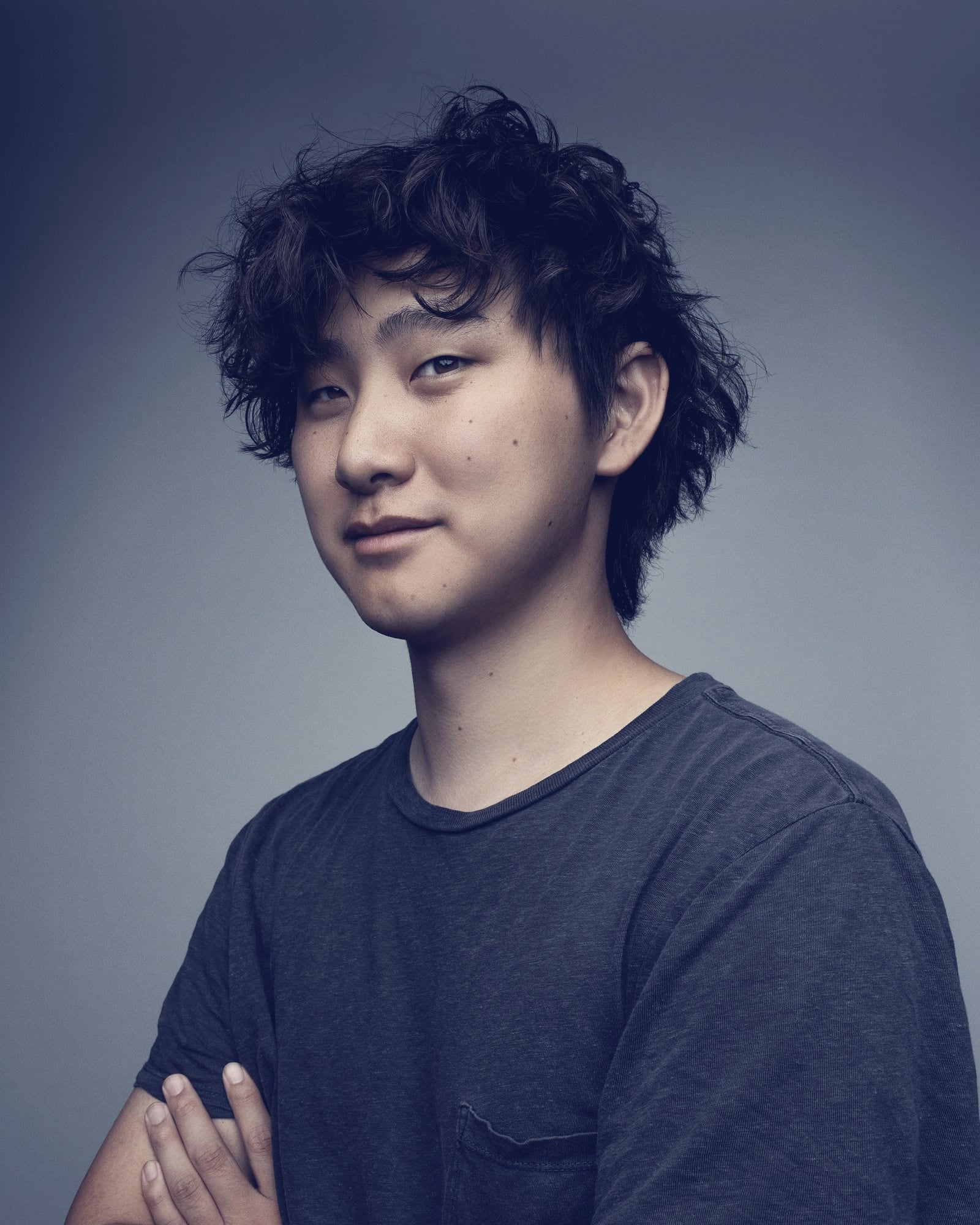
Luana Lopes Lara spent eight years at a Bolshoi ballet academy in Joinville, Brazil, and danced in a production of Swan Lake in Salzburg before enrolling at MIT. She graduated in 2018 with a degree in computer science, having interned as a quantitative trader at Bridgewater Associates and Citadel Securities. That same year, she and a classmate, Tarek Mansour, founded a company in San Francisco under the working name Kownig. It is now called Kalshi, and it has become one of the most litigated start-ups in the country.
Mansour, per Wikipedia, interned at Goldman Sachs in 2016 and traded at Citadel until 2018, experiences the page credits with inspiring the idea. The idea was an exchange where anyone can buy a contract that pays out if an event happens: a Fed rate cut, a hurricane, a Senate majority. The pitch to regulators was that this was a financial instrument. The pitch to customers, increasingly, was something else.
A license, then a lawsuit
Kalshi’s first piece of luck was bureaucratic. In November 2020 it received a CFTC license as a designated contract market, which the page describes as the first regulated platform to trade directly on event outcomes. It launched publicly in July 2021. Its second piece of luck was a fight it picked. In September 2023 the CFTC rejected Kalshi’s congressional-control contracts; Kalshi sued, arguing the agency had exceeded its authority. A federal court sided with Kalshi in 2024, and when an appellate court declined to stay that ruling, Kalshi relaunched the contracts. TechCrunch summarized the result simply: Kalshi “successfully sued the CFTC last year, securing the right for Americans to use its platform.” Wikipedia adds that Forbes counted this as the first legal U.S. presidential-election trading in over a century.
Then the money arrived, quickly. Kalshi was valued at $2 billion before an October 2025 round of more than $300 million, which put it at $5 billion. Less than two months later it raised $1 billion at $11 billion, led by Paradigm. In May 2026 a further $1 billion Series F, led by Coatue, valued it at $22 billion. Kalshi told Bloomberg its annualized revenue exceeds $1.5 billion; that figure is the company’s own, relayed by TechCrunch, as is its claim to host 90 percent of U.S. prediction-market activity.
The billionaire arithmetic
Forbes reported in December 2025 that Lopes Lara, then 29, had become the world’s youngest self-made woman billionaire, displacing Lucy Guo, on a roughly 12 percent stake. Wikipedia cites Forbes for a net worth of about $2.6 billion for each founder as of June 2026. These are estimates of a private company’s value, set by the investors who just paid for it. A stake can be marked up in a week and marked down in an afternoon.
What the product turned out to be
The sober description of Kalshi is a regulated venue for hedging risk. Its largest line of business is not that. Wikipedia reports estimated 2025 revenue of about $260 million, with sports accounting for 89 percent of it and more than 90 percent of site activity. In January 2026, users who won certain NFL contracts were reportedly repaid only their original stake until backlash prompted full payment.
Sports are where the CFTC license meets state gambling law, and the states have noticed. The same page lists a long docket for 2025 and 2026. Massachusetts won a preliminary injunction requiring Kalshi to geofence sports markets. An Ohio federal judge ruled in March 2026 that the products amounted to gambling under state jurisdiction. Arizona filed criminal charges, which a federal judge dismissed in May on the grounds that federal law preempts state law. Nevada’s regulators reached an agreement in July to stop what they called continued unlawful operation. Minnesota passed a ban that a federal judge halted. New York’s attorney general sued in July and, according to Wikipedia, sought a penalty of roughly $36 billion. Tribal plaintiffs, including a California tribe and the Ho-Chunk Nation, are also suing, the page notes, alleging illegal sports gambling on reservation land. Michigan’s attorney general, Dana Nessel, put the state’s view in a sentence: “Corporations cannot circumvent state gaming laws.”
Federal courts have split, which is the polite way of saying that nobody yet knows the answer. If the CFTC prevails, Kalshi is a national exchange. If the states do, it is a sportsbook with a patchwork of banned zip codes.
What it is evidence of
Three things. First, that the cheapest way to make a regulatory gap profitable is to be the first person standing in it. Kalshi’s license predates the sports boom by years, and having it was a moat when the market arrived.
Second, that credentials still matter in the new economy, even for people who ignore the old one. Two MIT graduates with quant-trading internships raised nine-figure rounds; this is less a story of kids bypassing the establishment than of insiders taking the legitimate route to the edge of it.
Third, the luck. The company’s value is tied to a sports calendar, a handful of court rulings, and a federal agency that could change its mind. A $22 billion valuation reached in under a year looks like a verdict on a business model. It is a bet on a legal theory that is still being argued in at least nine states.
Not financial advice.
Sources
- Luana Lopes Lara, Wikipedia, October 27, 2026
- Tarek Mansour, Wikipedia, October 27, 2026
- Kalshi, Wikipedia, October 27, 2026
- Kalshi raises $1B at $11B valuation, doubling value in under two months, TechCrunch, December 2, 2025
- Kalshi hits $5B valuation days after rival Polymarket gets $2B NYSE backing at $8B, TechCrunch, October 10, 2025
- Kalshi doubles valuation in 5 months, hitting $22B, TechCrunch, May 7, 2026
Image: Alexander Karnyukhin for Forbes, Used with credit.