He Left MIT at Nineteen to Label Data. Meta Paid $14.3 Billion for the Result.
Alexandr Wang built Scale AI on an invisible workforce, became a billionaire at 24, and was hired by Meta at 28. The workers, and the timing, are part of the story.
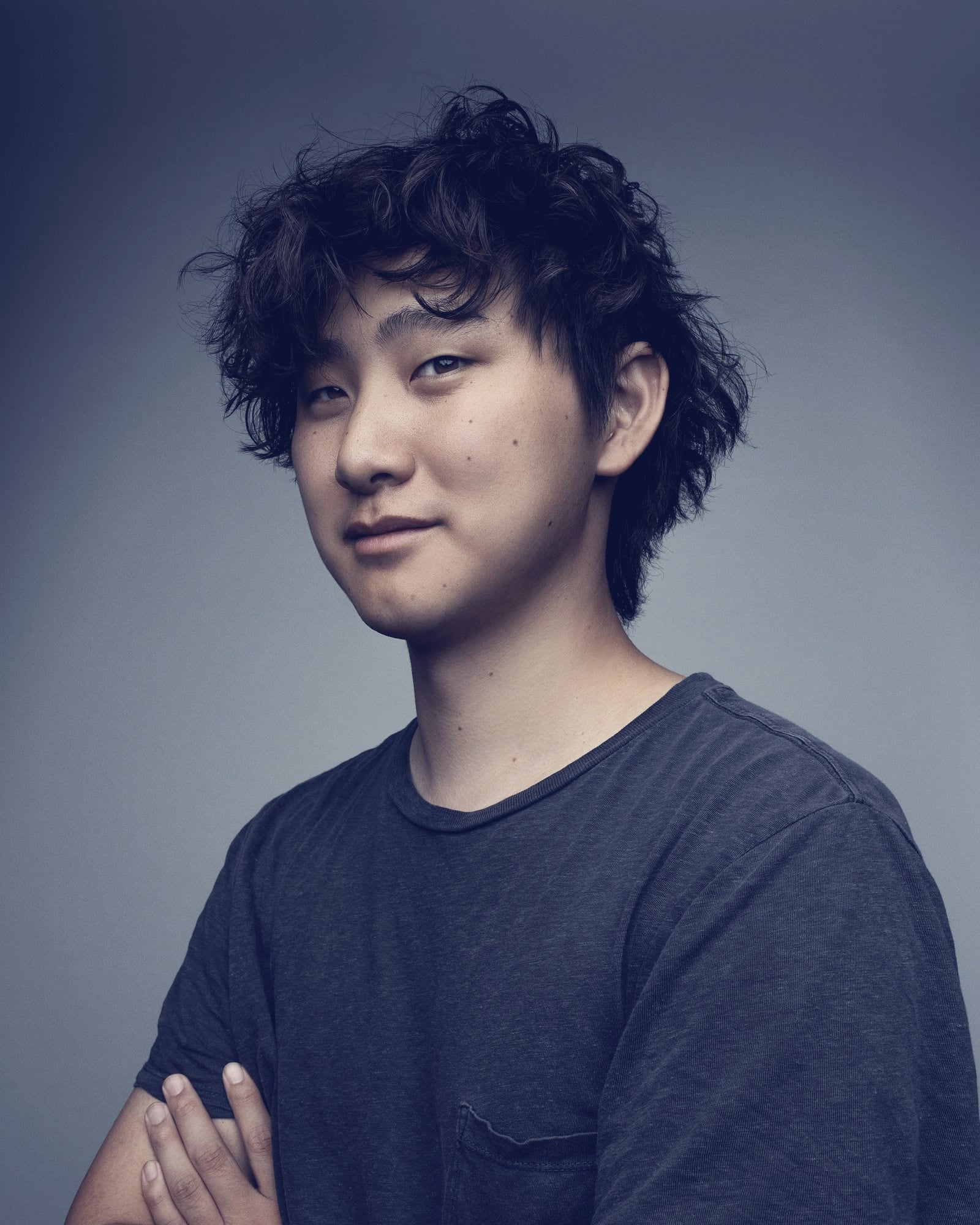
Alexandr Wang was born in January 1997 in Los Alamos, New Mexico, according to Wikipedia, to Chinese immigrant parents who worked as physicists at Los Alamos National Laboratory. It is a fitting origin for a man who would end up in a modern arms race of a different sort. He attended Los Alamos High School, took a software job at Addepar in Silicon Valley, and then enrolled at MIT.
He did not stay long. Silicon Republic reports that he founded Scale AI in 2016 at 19, “after a brief stint at MIT, which he left,” and then joined Y Combinator to launch the company. Wikipedia’s wording is blunter: he “dropped out of MIT to co-found Scale AI in 2016.” Neither source says he took a leave of absence, so this piece does not either.
Picks and shovels
Scale was started with Lucy Guo, with whom Wang had worked at Quora; Guo was fired in 2018. The product was unglamorous: people, mostly contract workers, who tag images and text so that machine-learning systems can learn from them. In August 2019, after Peter Thiel’s Founders Fund invested $100 million, the company’s valuation passed $1 billion. By July 2021 it was about $7 billion, and Wikipedia says that this made Wang, at 24, the world’s youngest self-made billionaire. In March 2024, an Accel-led round valued Scale at almost $13 billion, and in May 2024 it raised $1 billion, including from Amazon and Meta, at a $14 billion valuation.
The company also took on defense work. Wang testified before a House Armed Services subcommittee on AI adoption in July 2023, and the Pentagon’s Chief Digital and Artificial Intelligence Office engaged Scale to test and evaluate large language models for military planning, per a February 2024 DefenseScoop report that Wikipedia cites.
Then came the deal. In June 2025, Meta announced a $14.3 billion investment in Scale for a reported 49 percent stake, valuing the company at more than $29 billion, and Wang, then 28, left as chief executive to work on Meta’s superintelligence efforts while remaining on Scale’s board. Jason Droege, the chief strategy officer, became interim chief executive. “Meta’s investment recognises Scale’s accomplishments to date,” Wang said. Wikipedia lists him as Meta’s Chief AI Officer since 2025 and says Forbes put his net worth at $3.6 billion in April 2025; that is a magazine estimate, not a cash figure.
The invisible workforce
The valuation rests on labor that mostly never appears in the pitch. Scale’s workers are reached through platforms such as Remotasks, and the reporting summarized on Wikipedia is not kind. Many hires in the Philippines are freelancers who lack labor-law coverage. After the platform expanded to India and Venezuela, pay for some tasks fell below one cent amid what the article calls “vicious competition.” Late payments were reportedly common, and some workers received only a few percent of what they were promised. A 2022 Oxford Internet Institute study found that Remotasks met the “minimum standards of fair work” on only one of ten criteria. In early 2024 the platform ended operations in Kenya, Nigeria and Pakistan, citing “administrative and operational considerations.”
Courts have since been involved. In December 2024 a former employee sued Scale alleging wage theft and worker misclassification; a second employee filed a similar suit in January 2025. Also that month, several contractors sued alleging psychological harm from exposure to disturbing content. These are allegations, not findings, and the sources reviewed here do not report outcomes. The pieces consulted also give no response from Scale, so none is characterized here.
What it is evidence of
Three things.
First, that the AI boom runs on human labor at its foundation. Models do not learn from the internet alone; they learn from people who rate, correct and label, often for very little. Wang’s real insight, at 19, was that this work could be packaged, priced and sold to companies that did not want to manage it. The software was the interface to a labor market.
Second, that the dropout path can reach the largest balance sheets in the industry. Wang left a university after a short stay and, nine years later, was recruited by one of the world’s biggest companies in a deal with a headline number of $14.3 billion. That is the argument for the path, and it is also a selection effect: the dropouts whose companies never attracted a buyer like Meta rarely become the subject of profiles.
Third, the luck. Scale was founded just before neural networks became the center of the technology industry, and its customers were precisely the companies that suddenly needed enormous quantities of labeled data. Timing did much of the work. The structure of the Meta deal, a 49 percent stake with Scale remaining a separate company, as Wikipedia notes, is also a reminder of how unusual the arrangement is: one investor holds nearly half of a firm that sells to its rivals. Wikipedia lists Google, Microsoft and OpenAI among Scale’s commercial customers; whether any have drawn back since is not established by the sources reviewed here.
None of this dims the speed of the climb. It does complicate the headline. A young founder found a durable need, hired a global workforce to fill it, and was paid handsomely when the buyer arrived. Whether the workers, many of whom are paid by the task and are often invisible to the end customer, should have a larger share of that story is a question the lawsuits are, for now, still asking.
Sources
- Alexandr Wang, Wikipedia, October 27, 2026
- Scale AI, Wikipedia, October 27, 2026
- Remotasks, Wikipedia, October 27, 2026
- Meta invests $14.3bn in Scale AI, hires start-up's CEO, Silicon Republic, June 13, 2025
Image: Meta Platforms, Inc., via Wikimedia Commons, CC BY-SA 4.0.