The Dropout Premium, Revisited
Fifteen years after Peter Thiel began paying teenagers to leave school, the data separate what dropping out buys from what selection already knew.
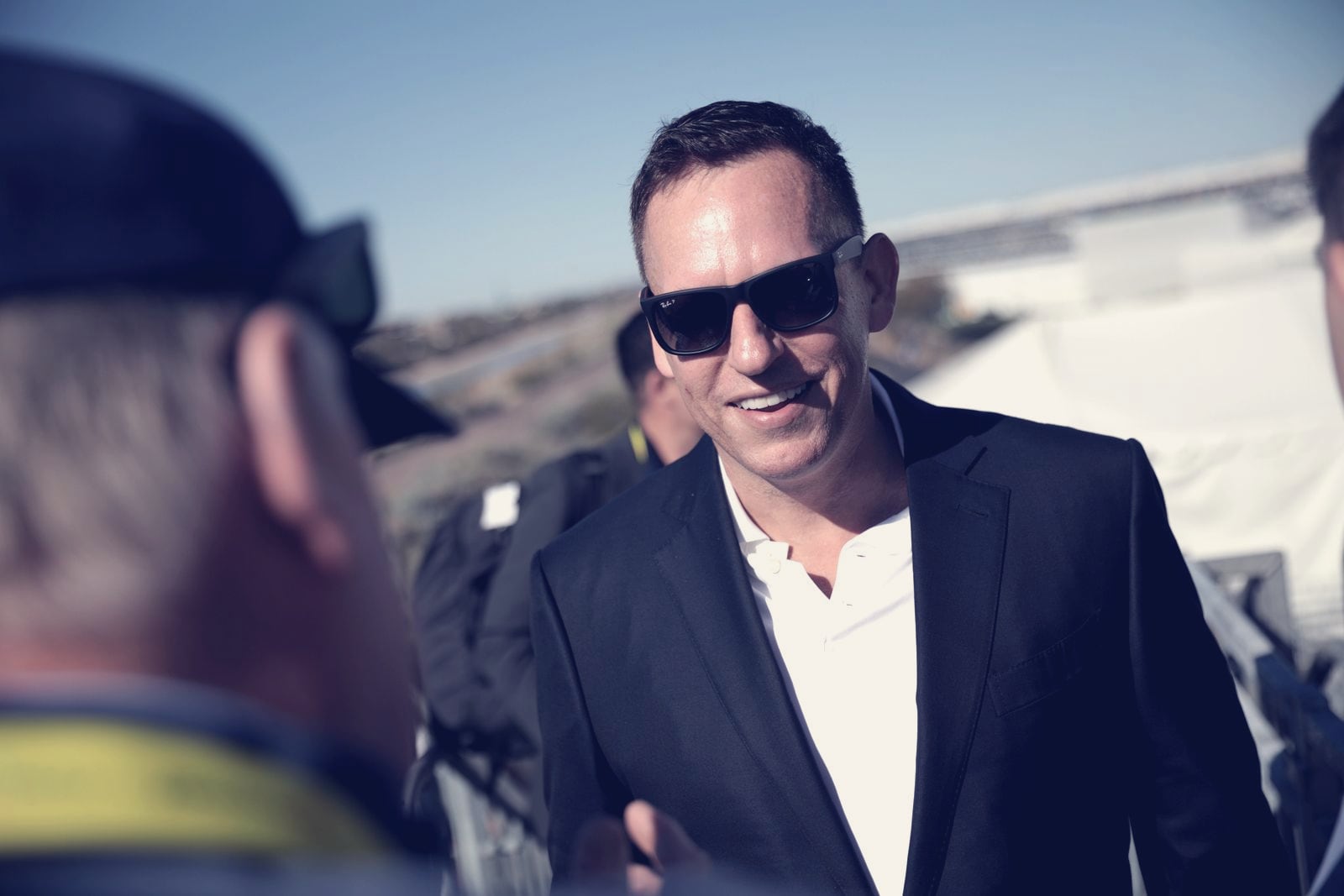
At Y Combinator events in San Francisco, a Stanford dropout told the San Francisco Standard early last year, “a scary amount” of founders wear stickers marking them as too young to drink. Selin Kocalar, who left MIT in her sophomore year in 2023 to start a company called Delve, put the local attitude more plainly: “It’s normal in this city to be a dropout.” She called the AI boom “a now-or-never opportunity” and leaving school “jumping off a ladder.”
It is a persuasive story, and it has a long pedigree. The question worth asking, a decade and a half after Peter Thiel first offered teenagers money to leave university, is narrow and checkable. When a young founder drops out, what exactly is the premium: what does leaving buy, and how much of the apparent payoff was there before anyone left? The honest answer is that there is a premium, that it is smaller than the legend, and that it is almost never the one people cite.
The fellowship, by its own numbers
Start with the purest test case. The Thiel Fellowship was conceived, according to a First Round Review history, only about 48 hours before Thiel announced it at TechCrunch Disrupt in 2010. Staff informally called it the “anti-Rhodes scholarship.” The first call for applications drew 438 entries, and the first fellows each received $100,000. By 2015 the Thiel Foundation could report, via Higher Ed Dive, that 83 fellows over four years had raised $72 million from investors, sold companies for $17 million and generated $29 million in revenue. Those are not the numbers of a failed experiment. They are also not the numbers anyone now remembers.
What people remember is the top. Bloomberg Opinion’s Aaron Brown wrote in 2023 that the fellowship had helped build 11 startups valued at $1 billion or more. A Wall Street Journal report, summarised here, put the number of people backed at 271, which puts the unicorn rate on the order of four percent (11 of 271, counts taken from different years). Fortune, in 2025, said the fellowship had funded over 11 unicorns with a combined worth of over $100 billion, and then declined to say how the figure was calculated. First Round’s account lists a Thiel Foundation figure of $47 billion in 2022 (excluding Ethereum), Fortune’s later $100 billion, and a third tally of $750 billion. The same event, three valuations. When a program’s headline figure moves by an order of magnitude depending on who is counting, the right response is to look at the denominator.
Four percent is a spectacular unicorn rate by any venture standard. It is also a rate earned by a very particular population.
Selection, in the fellowship’s own words
The First Round history is unusually candid about how the class was built. In 2016 there were 6,000 applicants, and about 60 percent of that year’s fellows were recruited rather than applying; the acceptance rate was below one percent, which the article says is more selective than Harvard. That is the first thing to hold in the mind: the fellowship did not take a random sample of teenagers and tell them to leave school. It identified a few dozen of the most unusual people of their age and then paid them to leave.
The selection rules cut in a specific direction. Cory Levy, who had already founded a company and raised venture capital, was passed over in the first class because staff considered him too far along. Another applicant, asked what he would do if his idea failed, kept saying he would try harder. He was not chosen either. In other words, the screen rewarded ambition and capability, and the people who emerged were those whom the screen had already marked as likely to emerge. As Higher Ed Dive put it in 2015, the advantages of the program make fellows “hardly representative of the average entrepreneurs who drop out to pursue their dreams.”
The program’s own alumni are sceptical of a clean causal story. Dale Stephens, an early fellow, told First Round that the greatest value was “the network and brand name.” That is a real premium, and a comprehensible one, but it is a premium on admission, which is something fellows could not have bought by dropping out alone.
The fellowship also had a bad stretch. First Round quotes Gibson, a founding staff member who left in 2015, calling years three through six among the worst for the program’s reputation. Larry Summers had called it “the single most misdirected bit of philanthropy in this decade.” And roughly a quarter of fellows eventually went back to finish their degrees, according to the Journal. In 2015, Higher Ed Dive counted six returnees among the first 83. One fellow, John Marbach, went back to Wake Forest after a year, leaving about $50,000 of his grant unspent, because he wanted a collegiate peer experience. One reading is that for some fellows the grant was a two-year sabbatical, which is not nothing, and which is not what the legend sells.
The base rates the legend leaves out
The pro-dropout case lives on a short list of names. The base rates live elsewhere.
Ali Tamaseb’s Super Founders analysed more than 200 American unicorns founded from 2005 to 2018. As Fortune reported, founders in that set were more likely to have PhDs than to be dropouts. The median CEO was 34 at founding. TechCrunch’s account of the same data found about 36 percent of founders at top-10 American schools and about 36 percent at schools outside the top 100, a barbell that argues against the idea that an elite credential decides everything. Dropouts are not the story of that list; they are a footnote to it.
The cleanest evidence on dropouts as such comes from Denmark. Guido Buenstorf, Kristian Nielsen and Bram Timmermans used Danish labour-market register data to follow students who did and did not finish. They report in Small Business Economics that “a larger share of dropouts starts a business.” But the authors attribute that to the endogenous decision to leave: the kind of person who walks out of a lecture hall is, to begin with, more likely to start something. Then comes the line that sits awkwardly beside the Silicon Valley story: “On average, becoming an entrepreneur does not allow dropouts to escape from their punishment in the labor market.” A caution that belongs here: this is Denmark, with its own labour market, and it describes the average dropout, which is the person the fellowship was never trying to select.
Age is a separate confound. Pierre Azoulay, Benjamin Jones, J. Daniel Kim and Javier Miranda, using Census Bureau records on more than 2.7 million founders, found in NBER Working Paper 24489 that the mean age of founders of the fastest-growing one-in-a-thousand new firms was 45, against 42 for founders generally. Founders with three or more years of experience in the same industry achieved upper-tail success at twice the rate of those with none. That is a strong argument for the opposite of dropping out. Leaving at nineteen means forgoing, at least for a while, the experience that the data say matters. The study does not measure schooling and was published in 2018, long before the current AI wave, so it is evidence about the premium on youth rather than a verdict on the premium on dropping out. But it cuts at the bundled claim that being young and being free of a degree are, together, the winning combination.
What Y Combinator shows, and does not
Y Combinator is the other great exhibit, and it is harder to read than anyone admits. YC does not publish founders’ dropout status. As Katie Jacobs Stanton of Moxxie Ventures told TechCrunch last December, “I don’t believe YC formally tracks dropout status.” The San Francisco Standard reported that YC declined to share cohort demographic data. So there is, as far as this publication can establish, no public denominator for the claim that YC’s youngest batches are winning because they left school.
What exists instead is a more unsettling pair of findings. First, TechCrunch noted that founders are “increasingly touting their dropout status” in the one-minute Demo Day pitch, and Stanton said that “being a dropout is a kind of credential in itself.” Second, a December 2025 paper by Rommin Adl in arXiv, using 4,323 YC companies from 2005 to 2024 and regressions on 2,113 of them, found that founder credentials explain very little of the variation in funding. The most consistent finding was that larger founding teams raise more: each additional co-founder was associated with about 21 percent more funding. That is a preprint about fundraising, not long-run success, and we could not confirm that dropout status is among the credentials it tests. It is a caution, not a verdict: the better-documented fact is that nobody outside YC can say how many of its founders left school.
Investors, quoted in the same TechCrunch piece, are divided in the way one would expect. Yuri Sagalov of General Catalyst said he does not think he has “ever felt any different about someone who graduated or didn’t graduate.” Kulveer Taggar of Phosphor Capital described the founder’s own calculation as a choice between finishing a degree and building, and said the mood includes “maybe FOMO.” And the article names founders on both sides of the line: Brendan Foody of Mercor left Georgetown, while Michael Truell of Cursor graduated from MIT and Scott Wu of Cognition from Harvard.
Last September, Y Combinator itself placed a quiet bet against the myth. It launched Early Decision, which accepts and funds students while they are still enrolled and lets them join a batch after they graduate. Managing partner Jared Friedman called it “designed for graduating seniors who want to do a startup but also want to finish school first.” TechCrunch noted that YC never explicitly required dropping out but had “quietly reinforced” that culture, with many successful alumni joining young. The institution that fed the folklore has built a product for people who want the acceptance without the departure.
Survivorship, luck and the unpublished column
The structural problem with the dropout premium is that it is calculated on the winners. Every list of famous dropouts is a list of people who left and succeeded; the people who left and did not never get a profile. Fortune’s 2025 piece, otherwise a cheerful catalogue, concedes that “not every college drop-out entering the program has been successful.” The Danish register is the closest thing to the uncounted column, and it reports a penalty.
There is also luck, and timing luck in particular: a founder who leaves in one year and one who leaves in another are not running the same experiment, and the market the first one entered may not return. Dylan Field, according to Fortune, dropped out of Brown after less than two years. Whether he would have built Figma with a degree is unknowable, and that is the point. Nobody gets to run the control.
What is premium and what is selection
Sorted honestly, the evidence leaves four things standing.
First, selection is the largest component. Programs that admit fewer than one percent, recruit the majority of their classes and reject applicants who say they would try harder if they failed are not testing the effect of dropping out. They are testing the effect of picking the right people, and then giving them the time and the cheque.
Second, there is a real but narrow premium on time. For a person who has already shown the capacity to ship, two years of unstructured runway, a network and a brand are worth more than two years of a lecture schedule. That is Stephens’s “network and brand name,” and Kocalar’s “now-or-never.” It is a timing option, and it is priced by the market in front of the founder rather than by the dropout’s character.
Third, there is a signalling premium, and it is eroding by its own success. Once Demo Day has founders announcing that they left school, the announcement is cheap, and the evidence from the funding data is that it moves little.
Fourth, the premium for the median dropout may be negative. That is what the one rigorous dataset we found says, and Early Decision suggests that YC itself no longer wants to require the leap.
The sharp turn is this. The most valuable thing the Thiel Fellowship and Y Combinator sell has never been the leaving. It has been the being chosen. The dropout premium, to the extent that it exists, is a premium on being picked by someone who is good at picking, and the departure is merely the receipt. Y Combinator has now started handing out the receipt before the departure, which is the clearest admission yet of what was being sold.
Sources
- Gen Z and millennial founders dropped out of college, took $200,000 from Peter Thiel, and built companies worth over $100 billion, Fortune, August 16, 2025
- Five years later, is Thiel's college dropout fellowship a success?, Higher Ed Dive, February 10, 2015
- Permission to Think For Yourself: Inside the Thiel Fellowship's Early Years, First Round Review, October 14, 2026
- What Happened After Peter Thiel Paid 271 Students to Drop Out of College? (summary of Wall Street Journal report), Slashdot, February 24, 2024
- Thiel's Unicorn Success Is Awkward for Colleges (Bloomberg Opinion, abstract), Bloomberg, via stafforini.com, October 19, 2023
- 'College dropout' has become the most coveted startup founder credential, TechCrunch, December 31, 2025
- Y Combinator launches Early Decision for students who want to graduate first, build later, TechCrunch, September 24, 2025
- Founders are dropping out of college to chase the AI boom, The San Francisco Standard, February 13, 2025
- Founder Backgrounds and Startup Funding: Evidence from Y Combinator, arXiv (Rommin Adl), December 15, 2025
- Age and High-Growth Entrepreneurship (NBER Working Paper 24489), National Bureau of Economic Research, April 1, 2018
- Steve Jobs or No Jobs? Entrepreneurial activity and performance among Danish college dropouts and graduates, Small Business Economics (via RePEc), January 1, 2017
- What does it really take to be a unicorn founder, Fortune, May 7, 2021
- A new book aims to blow up assumptions about the best founding teams, TechCrunch, May 18, 2021
Image: Gage Skidmore, Wikimedia Commons, CC BY-SA 2.0.