Prime Was Worth Reselling at $1,500 a Can. Then the Buzz Went.
KSI and Logan Paul built a drink that reportedly outsold Gatorade at Walmart, then watched UK sales halve. Prime is the creator-brand boom and bust in one can.
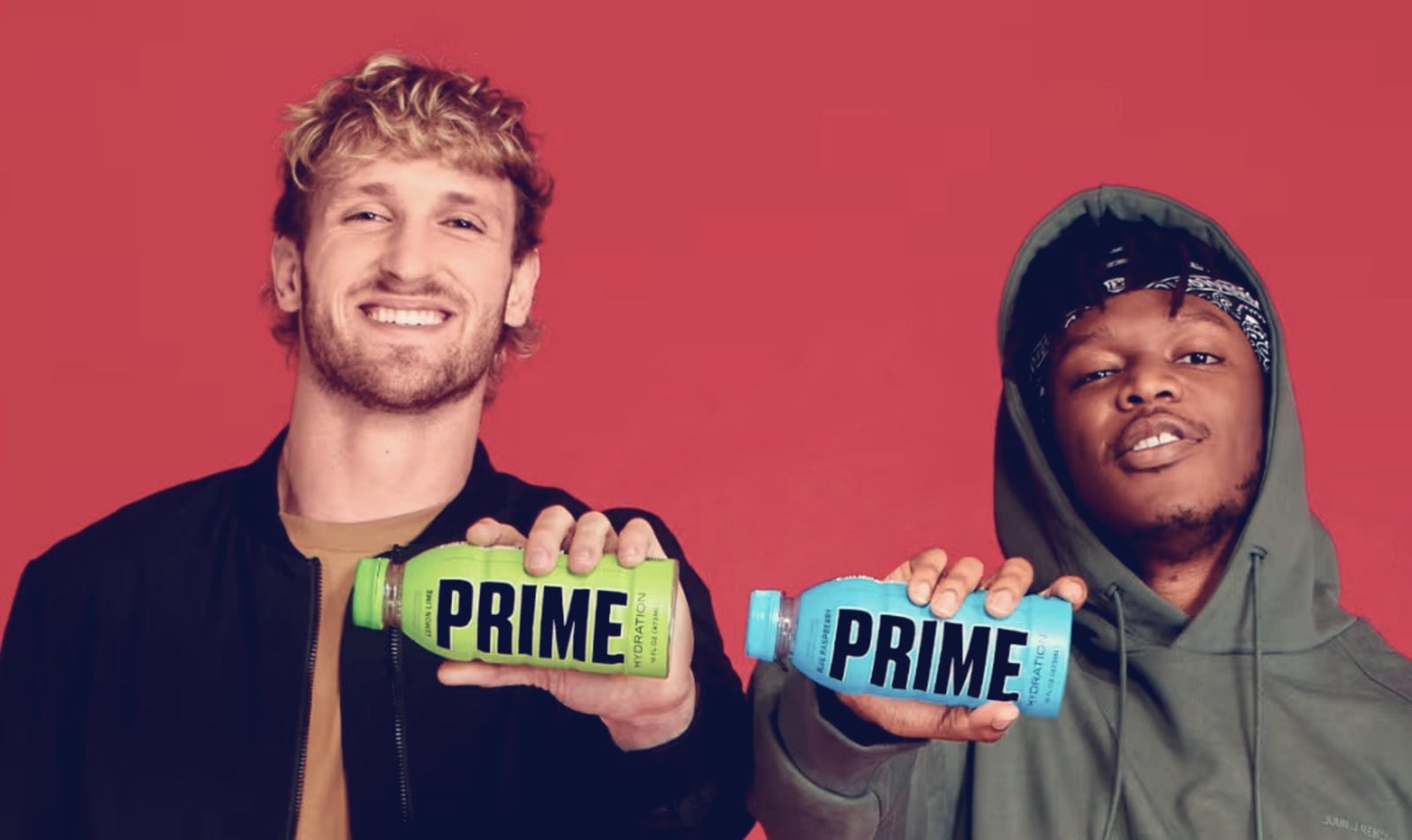
At the peak, a can of Prime that cost under $2.50 in a shop was listed on resale sites for £1,200, almost $1,500. British retailers put security stickers on a new strawberry watermelon flavour to deter theft. Tesco rationed customers to three bottles. By the spring of 2024, the same drink was in clearance bins at 31 pence.
That arc, from scarcity to the discount aisle in about two years, is the story of Prime, the sports drink launched in January 2022 by the British YouTuber KSI and the American YouTuber Logan Paul. It is also, depending on your temperament, a warning about the creator-brand economy or a reminder of how much money a pair of audiences can move in a hurry.
The founders
Olajide Olatunji, known as KSI, registered his YouTube channel in 2009, posting FIFA commentary, joined the Sidemen collective in 2013, and later became a rapper and a boxer. He and Paul fought twice: a majority draw in 2018 and a split decision for KSI in 2019. He co-founded Misfits Boxing with Wasserman Boxing in 2021. The feud with Paul gave both of them a shared audience. When ABC News in Australia described the pair a year after the company was founded, it gave them 40 million YouTube subscribers between them.
The peak
Prime started as an electrolyte-spiked coconut water and later added caffeinated energy drinks. Fortune collected the headline numbers: $250 million in sales in the first year, per Yahoo Finance; a projected $1.2 billion in 2023, per Bloomberg; and, per Dexerto, a 2023 moment when it outsold Gatorade at Walmart. Note the verbs. Those are reported or projected figures, relayed from other outlets, and Fortune says that representatives for Paul and KSI did not respond to its request for comment. Nobody outside the company has audited them in public.
The sales were real enough to be measured at the other end. In the UK, the year to early September 2023 grew Prime’s sales by £130.5 million to £131.1 million, per NIQ data. A contest to celebrate $1 billion in sales offered a $500,000 24-karat gold bottle, and pop-up stores opened in London and New York for 48 hours. For a while the stunts compounded.
The warnings
Trouble arrived in parallel with success rather than after it. In March 2023, schools in Queensland and Western Australia banned the drinks. The energy version contained about 56 mg of caffeine per 100 ml, roughly double Australia’s 32 mg limit, according to ABC. The packaging itself said “not suitable for children under 15 years of age.” In July 2023, Senator Chuck Schumer asked the FDA to investigate the energy drinks over caffeine levels and their popularity with children. About a month later a class action alleged that a discontinued flavour contained PFAS, the so-called forever chemicals.
Prime contested that last claim. Its representatives said the plaintiffs relied on “speculation and inaccurate ‘interim health advisories’ that have been superseded,” and that “health” appears nowhere on the label. Paul said on TikTok that “anyone can sue anyone at any time that does not make the lawsuit true.” The suit, filed in federal court in Northern California, sought $5 million. In July 2024 the US Olympic and Paralympic Committee sued for trademark infringement over a Kevin Durant bottle, alleging in the complaint that the use was “willful, deliberate, and in bad faith.” None of these actions is a finding. They show a product sold to a young audience at industrial scale while regulators, schools and trademark lawyers all discovered it at once.
The bust
Then came the numbers that did not need a press release. UK sales in the first quarter of 2024 fell 50 percent, to £12.8 million from £26.8 million, per Fortune citing The Grocer. For the year to early September 2024, sales fell 48 percent, to £68 million from £131.1 million, making Prime the fastest-falling food or drink brand in that survey. Filed accounts for the UK company showed turnover dropping from £112.2 million to £32.8 million, and net profit from £3.72 million to £312,393. The company’s own statement conceded it: “In 2024 the consumer interest has moderated and revenues have decreased.”
The most revealing document is the bottler’s. In August 2024, Refresco sued Prime Hydration in Delaware for $68 million, alleging breach of a three-year contract with a minimum volume and a “take or pay” clause. Per Bloomberg Law, the complaint attributed the slowdown to “the fading of the social media buzz that had powered” the brand. Paul and KSI were not named as defendants, and Prime had not yet appeared in court. These are allegations. But the contract structure matters on its own: a brand sized for a billion-dollar projection is a brand that has promised to buy a billion dollars of bottles.
What it is evidence of
Three things, and not all of them flattering.
First, a creator can manufacture demand without manufacturing a category. Jon Evans of System1, who has worked in soft drinks, told Marketing Week that more than half of the 20 most successful soft drink launches of the last decade lost sales in their second year, and that Prime was an exaggerated case. His contrast was Red Bull, which started in a small part of the market and proved the concept rather than doing a big launch and moving on. Andrea Hernández of Snaxshot, quoted by Fortune, put the point more bluntly: “A brand cannot live on hype alone.”
Second, the buyers were young and aged out. Fortune’s reading is that velocity depended on preteen interest, which may fade as those kids become teenagers. That is a hypothesis, not a measurement, but it fits a product whose own label told under-15s to stay away.
Third, luck was load-bearing. Two of the most-watched creators in English-speaking YouTube, a famous feud and a supply chain willing to sign take-or-pay terms all arrived together. They did not arrive again. In 2024 the pair also announced Lunchly, a lunch kit made with MrBeast: another audience added to the same model.
Prime is not a failure of influence. The influence worked precisely as advertised. What it could not do was substitute for repeat purchase, regulatory comfort and a manufacturing contract sized to the median month rather than the best one.
Sources
- The meteoric rise and stunning fall of Prime, Logan Paul's energy drink that was once resold for almost $1,500 a can, Fortune, April 27, 2024
- Logan Paul's Prime Sports Drink Sued by Bottler for $68 Million, Bloomberg Law, August 5, 2024
- Prime sees sales fall by almost 50% in 2024, Marketing Week, December 14, 2024
- Prime profits fall by over 90% as sales continue to plummet, Marketing Week, June 24, 2025
- Logan Paul, KSI's Prime Hydration faces lawsuit over the 'harmful chemicals' in its bottles, Tubefilter, May 10, 2024
- U.S. Olympic Committee hits Logan Paul's drink brand with trademark infringement suit, NBC News, July 21, 2024
- Prime energy drink sold by KSI and Logan Paul banned from Australian schools, ABC News (Australia), March 29, 2023
- KSI, Wikipedia, October 27, 2026
Image: Prime Hydration press photo, via Tubefilter, Press photo (Tubefilter), used with credit.