Emma Chamberlain Built a Coffee Brand. Then Came the Shelves.
A YouTuber with millions of subscribers learned that an audience is not a supply chain. Her coffee company is now betting on cafes.
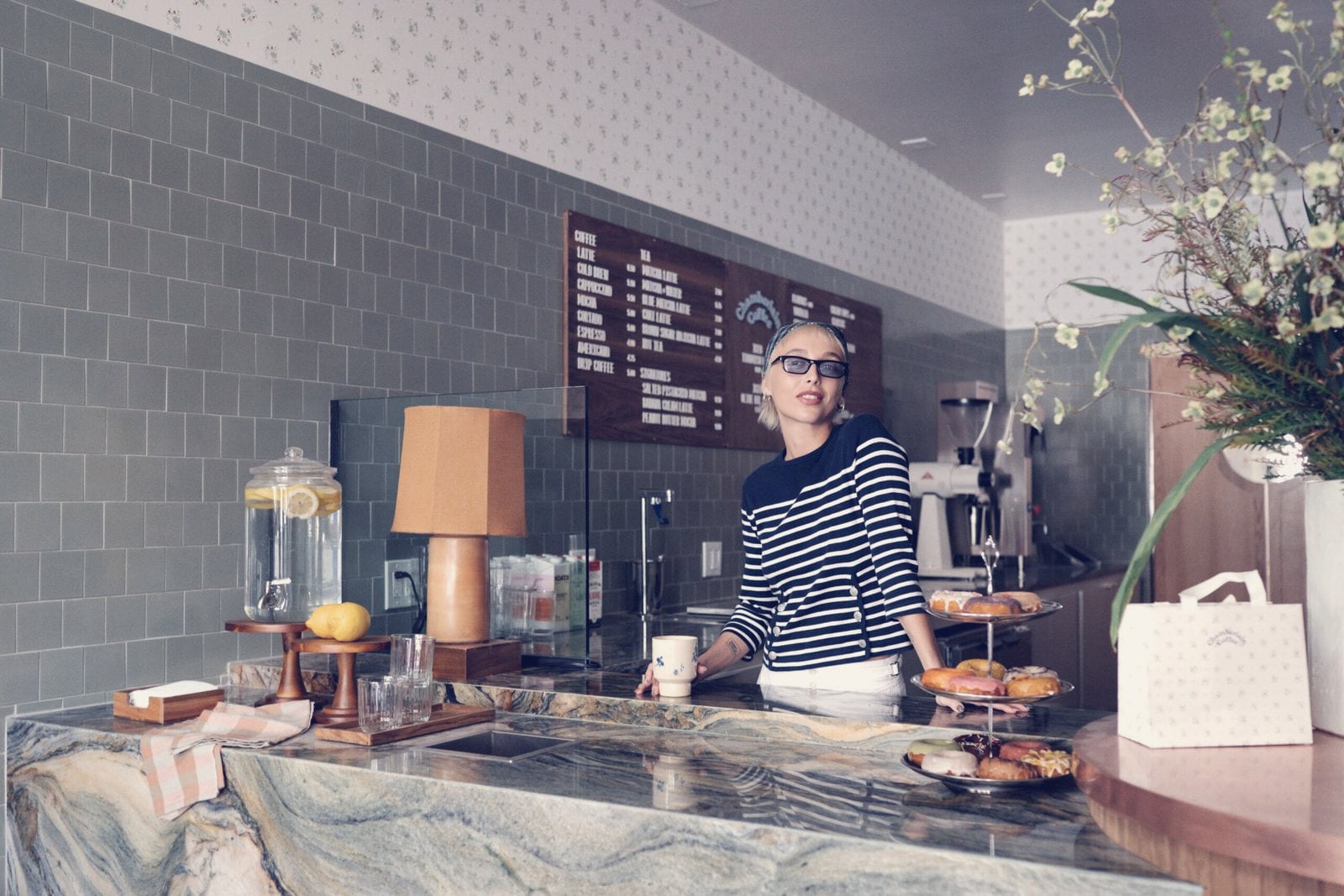
On May 7, 2026, a Chamberlain Coffee cafe opened at 1142 Abbot Kinney Boulevard in Venice, California, Los Angeles magazine reported, the first standalone cafe for a company founded in 2019 that had sold coffee mainly online and through retailers. “Since Chamberlain Coffee’s inception, my ultimate dream was to open cafes,” Emma Chamberlain told the magazine. She had announced the plan on The Tonight Show, according to the Santa Monica Daily Press, saying: “We didn’t want to open just another coffee shop.”
It is a dream, but it is also a retreat. To see from what, go back to the boom.
Fast
Chamberlain Coffee started in 2019, TechCrunch reported, when Chamberlain was already a YouTube star with more than 12 million subscribers. Her chief executive at the time, Christopher Gallant, described the early growth this way: “It took off like crazy, so she brought in folks that had worked in the beverage and branding spaces.” A $7 million Series A followed in August 2022 and another $7 million in 2023, with Blazar Capital and United Talent Agency among the new investors. The company said it would be in 4,000 Walmart stores, had launched ready-to-drink cold brew lattes in May 2023, and planned, per Gallant, to double revenue that year.
She was frank about the odds. On the Colin & Samir show, in an interview Sprudge covered in December 2023, she said she loved building a business, but that the brand could all go under tomorrow, and that owning it had been “the hardest thing I’ve ever done.” The headline’s claim that she regrets the whole thing is Sprudge’s gloss, not her words.
Slow
In March 2025 Natalie Jarvey, in her Like & Subscribe newsletter, reported on investor documents describing a fundraising scramble. Sprudge summarized the figures: according to those documents, the company had sales of about $19 million in 2023 and nearly $22 million in 2024, up 14% and short of its forecast, and operated at a loss. It raised another $4.6 million in 2024, per PitchBook. The 2025 plan called for $33 million in sales and a return to profitability. The documents put the company in more than 10,000 retailers and described a plan to scale back its retail presence and streamline products.
The company attributed the loss to “growing pains,” Sprudge reported, citing co-packer problems that led to stock shortages and executive shakeups. Gallant had left; Sprudge, citing the Los Angeles Times, reported he went on to run the coconut-water brand ZICO Rising. Chamberlain and Gustav Langberg Hossy, the former chief operating officer, took over as co-chief executives. The new priority, a company representative told Jarvey, was “profitability over growth,” with four more cafes in the works.
None of those figures are audited, and none come from the company’s own filings. They are leaked or investor-facing materials, and we have seen no company response to them. They should be read as one side’s slide deck.
What she is evidence of
Set Chamberlain beside the more famous creator-founders and a pattern appears: an audience is excellent at launching a product and unremarkable at keeping it on a shelf. Her subscribers could be told about a new bag of beans in a day. They could not fix a co-packer, forecast demand across thousands of stores or keep a latte in stock. Those are the unglamorous disciplines of a consumer-goods company, and the creator route does not exempt anyone from them.
Two things are worth keeping apart. One is bad luck and bad execution: the supply problems and the management turnover, which the company itself acknowledged. The other is structural. Wholesale retail typically asks a brand to be everywhere before it is profitable anywhere, and a founder whose business also depends on her own time, 40% on the company and 40% on her podcast by her own account to Colin and Samir, is stretched across both.
The cafe is the interesting answer. It is a smaller, controllable room where she makes the product, serves it, and appears in person, the one place the creator advantage (people turn up to see her) does not depend on a distributor. Whether that adds up to a business is not yet in the numbers we can see. The reported 2024 revenue of nearly $22 million is a real business and a modest one for a brand launched by an audience of that size. The question for 2026 is whether she has learned to run a coffee company or has merely found a better stage for one.
Sources
- Emma Chamberlain's coffee company raises $7M more as YouTube creators push into commerce, TechCrunch, June 1, 2023
- Emma Chamberlain high-key regrets starting her coffee company, Sprudge, December 6, 2023
- Emma Chamberlain to open first standalone Chamberlain Coffee cafe in Venice, Santa Monica Daily Press, March 21, 2026
- Internal documents don't paint a rosy picture of Chamberlain Coffee, Sprudge, March 21, 2025
- Emma Chamberlain opens Chamberlain Coffee cafe on Abbot Kinney, Los Angeles magazine, May 7, 2026
Image: Courtesy Chamberlain Coffee, via Los Angeles magazine, Press kit (Chamberlain Coffee), used with credit.